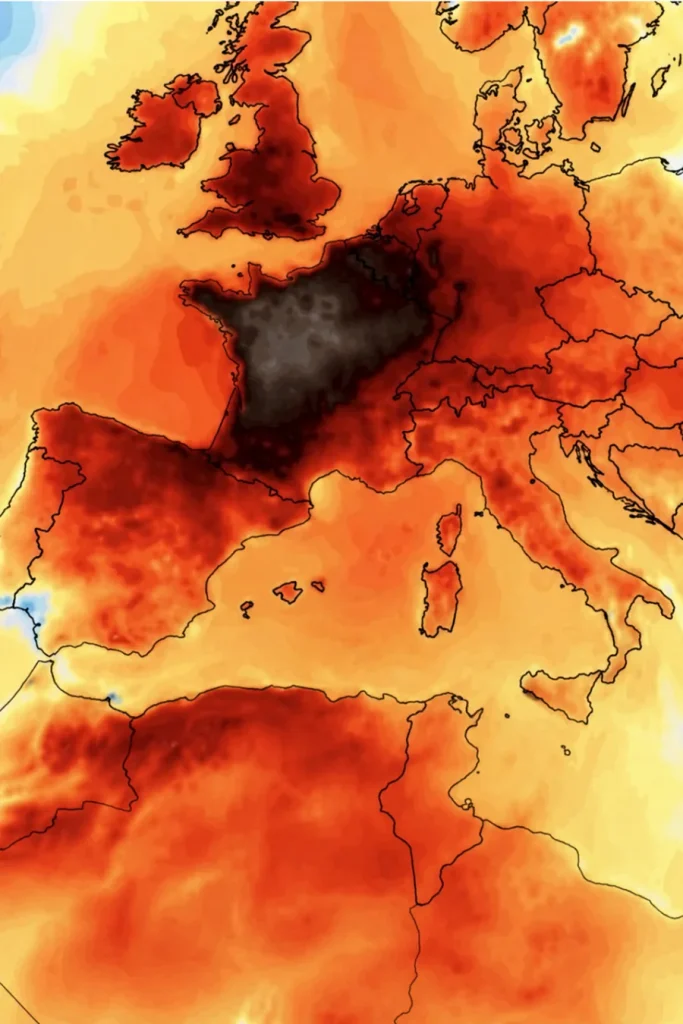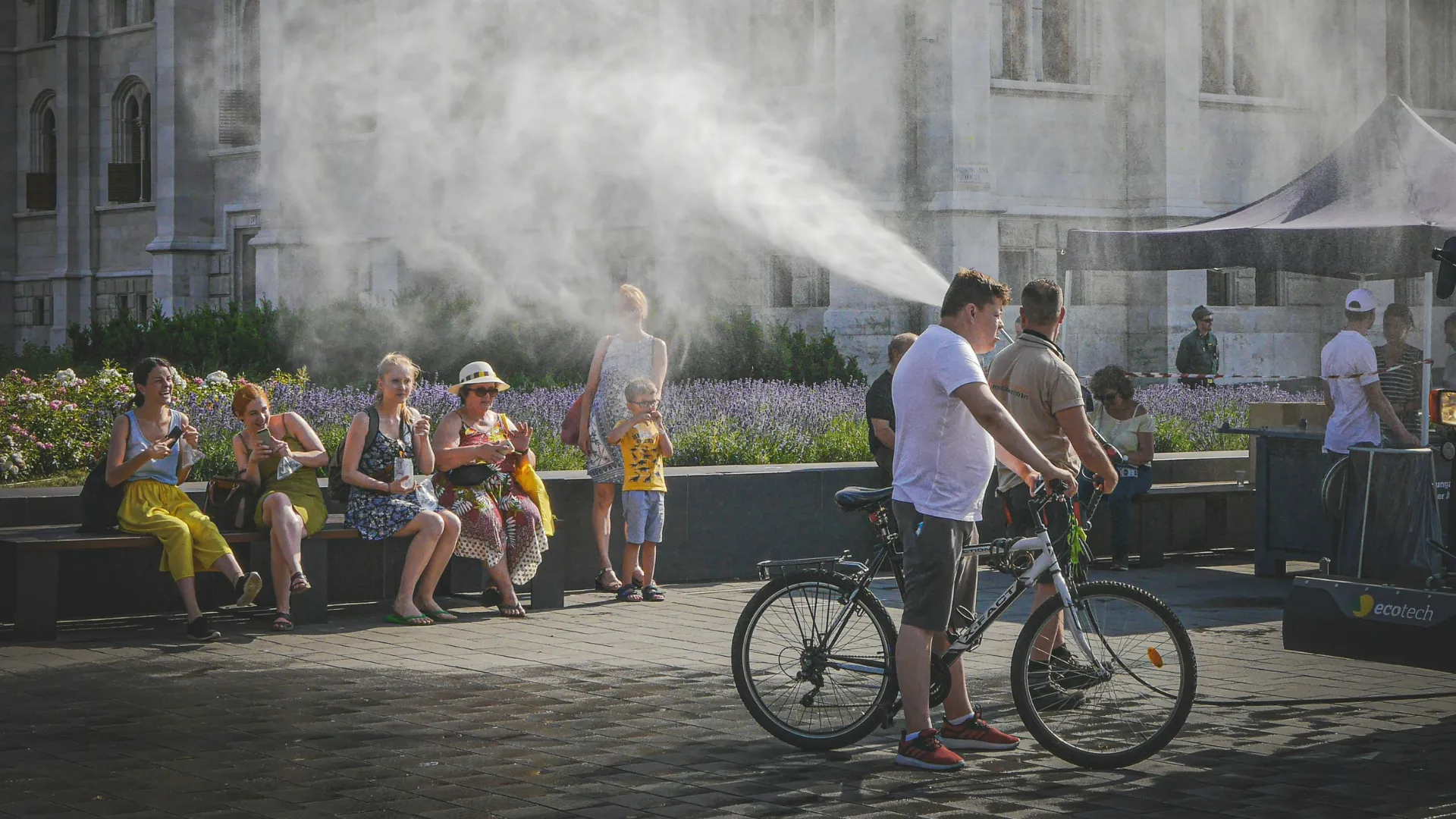
Europe is in its fifth heatwave of 2026. On 13 August, more than 135 million people across France, Italy, Spain and the United Kingdom were forecast to sit under temperatures well above seasonal norms, with much of western and central Europe running 12 to 16°C above the long-term average for mid-August. France recorded 21 monthly station records falling in a single day. The UK logged its hottest day of the year at 38.1°C in west London. A wildfire burned through the New Forest in southern England. A buoy west of Mallorca measured a sea surface temperature of 33°C. The number that concerns me most is not any of those daytime peaks. It is the night-time minimum. Parts of Europe have been experiencing near nation-wide tropical nights, meaning overnight lows that fail to drop below 20°C. This matters physiologically in a way that a headline daytime figure does not. The human body clears accumulated heat load overnight. When it cannot, thermal strain compounds across consecutive days. Cardiovascular and renal systems that coped on day one begin to fail on day four. Most heat mortality is not people collapsing in the sun. It is older people with existing conditions dying quietly indoors, several nights into an event, in housing that has stopped cooling down.
Here is what I think gets missed in most commentary on European heat. Europe is not unaware of this problem. After the 2003 heatwave killed more than 70,000 people, France built a national heat health plan, and most European states followed with prevention systems of their own. Those plans exist. They have existed for two decades. However, the mortality figures since then are these: roughly 61,700 heat-attributable deaths across 35 European countries in the summer of 2022, around 47,700 in 2023, and over 62,700 in 2024. The ISGlobal team behind the 2022 analysis drew the obvious and uncomfortable conclusion in Nature Medicine, which is that the adaptation strategies currently available may still be insufficient. That gap between having an adaptation plan and being adapted is the central problem in my field, and Europe is now demonstrating it at scale in front of an audience that assumed it was a developing country issue.
Heat action plans are the inexpensive part of adaptation. They are advisory systems, communication protocols and emergency thresholds. What actually reduces excess mortality is slower and far more capital intensive: building stock that does not trap heat, urban form that does not amplify it, health systems with surge capacity in August, labour regulation that stops outdoor work at defined wet bulb thresholds, and social infrastructure capable of finding isolated elderly people before the third consecutive tropical night. European housing was largely designed to retain heat through cold winters, which is a fifty-year retrofit problem rather than a summer messaging campaign. You cannot warn your way out of a thermally unsuitable building. Heat also does not kill evenly. The same 2022 analysis found substantially higher heat-attributable mortality among women than men, with the sharpest rates in the over-80s. Outdoor workers, people in low-income housing without cooling, and those living alone carry disproportionate exposure. Any adaptation response that treats a population as uniformly at risk will misallocate its money.
At C4 EcoSolutions, our adaptation work spans more than 117 countries, most of them with a fraction of Europe’s fiscal space, health system depth and institutional capacity. So I read this summer with a particular question in mind. If a continent this wealthy, this well-governed and this thoroughly warned is still recording tens of thousands of heat deaths per season after twenty years of prevention planning, what does that imply for countries where dangerous wet bulb conditions occur more frequently, where outdoor labour is a much larger share of employment, and where the health system has no surge capacity to speak of? It implies, at minimum, that adaptive capacity does not scale as neatly with national income as adaptation finance discussions often assume. Wealth buys you the option to adapt. It does not deliver the adaptation.
Three things I would take from this, professionally. First, stop treating extreme heat as a seasonal emergency management problem and start treating it as an infrastructure, housing and health system design problem on a multi-decade horizon, which changes who needs to be in the room and which budget line pays. Second, fund delivery rather than planning. Most national adaptation plans I read are technically competent and financially unbacked, and a plan without capital attached is a document, not a defence. Third, change the indicator. The measure of success is not how many jurisdictions have a heat action plan. It is excess mortality avoided, and very few countries are measuring it well enough to know whether their investments are working. Europe’s summer is not a warning about a distant climate future. It is a live test of whether adaptation planning translates into protection, and this year the answer looks like a qualified no. For those of us who do this work in places with far less margin for error, that is worth sitting with.