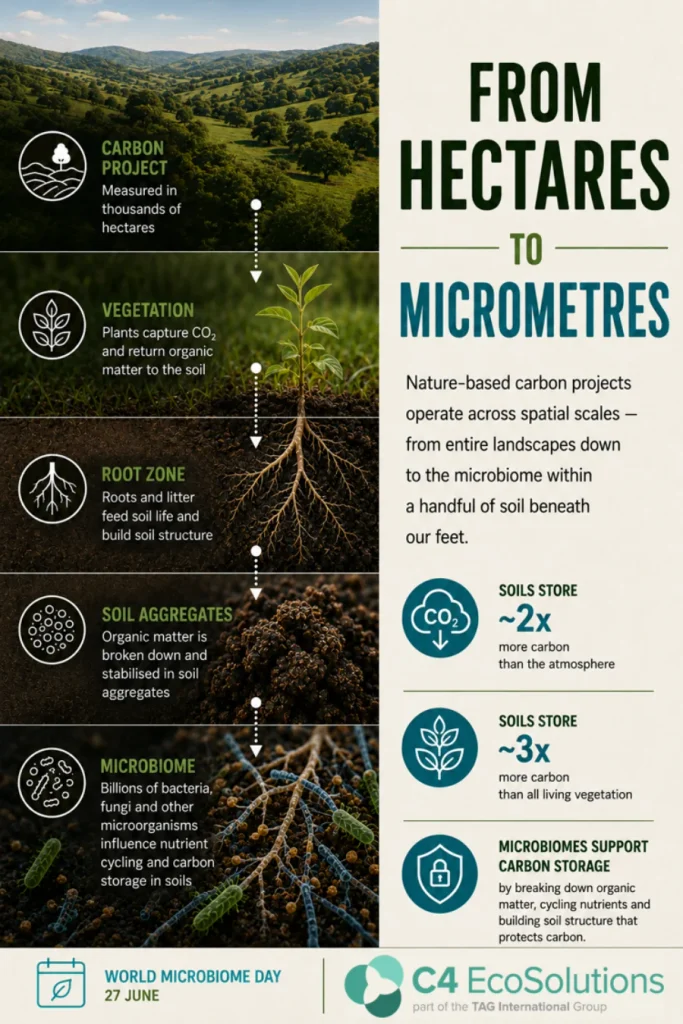
The largest climate solutions on Earth depend on some of the smallest forms of life. Nature-based carbon projects may span thousands of hectares, yet many of the ecological processes underpinning their success occur at scales measured in micrometres.
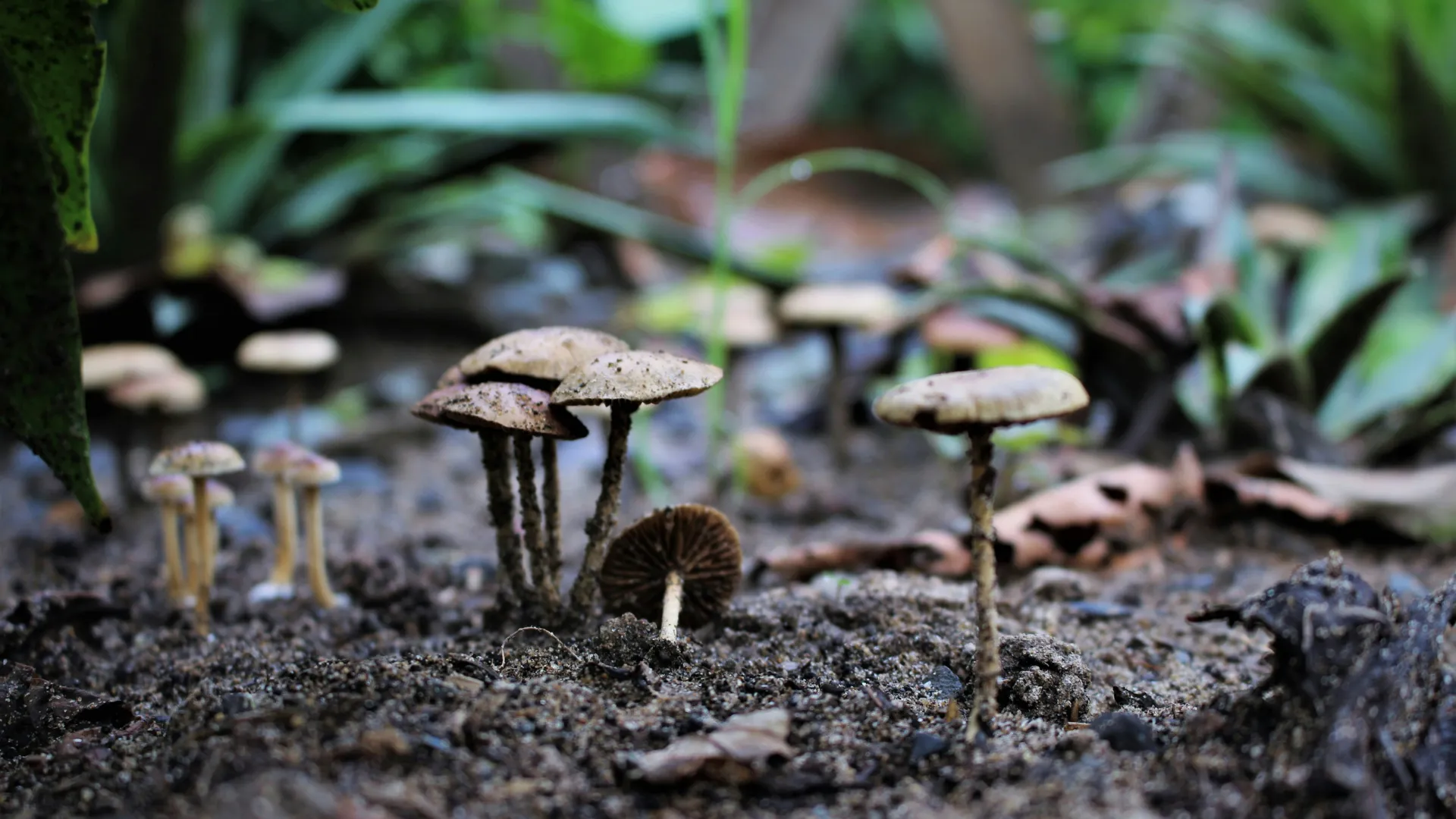
World Microbiome Day is a reminder that beneath every grassland, forest, wetland and agricultural system lies vast and unseen communities of microscopic life. Collectively known as the #microbiome, these communities comprise bacteria, fungi and other microorganisms that help regulate how ecosystems function.
The most visible outcomes of carbon projects are often the number trees planted, vegetation restored or hectares under improved management. In many cases, however, a substantial proportion of the carbon being measured and monitored is stored in soils, where the processes influencing carbon storage happen out of sight.
Restoring vegetation does more than increase plant cover. It also rebuilds the ecological conditions that support the microbiome in soils. Through plant roots, leaf litter and other organic matter inputs, restoration activities provide the resources that sustain these microscopic communities, which in turn influence how much carbon is ultimately retained and stored in soils.
This matters, because soils store around twice as much carbon as the atmosphere and three times more than all living vegetation. Much of this carbon passes through, and is influenced by, the microscopic organisms living in soils.
At C4 EcoSolutions — we design, support and implement interventions measured in hectares — while recognising that many of the ecological processes underpinning their success occur at scales measured in micrometres, within the microbiome beneath our feet.