
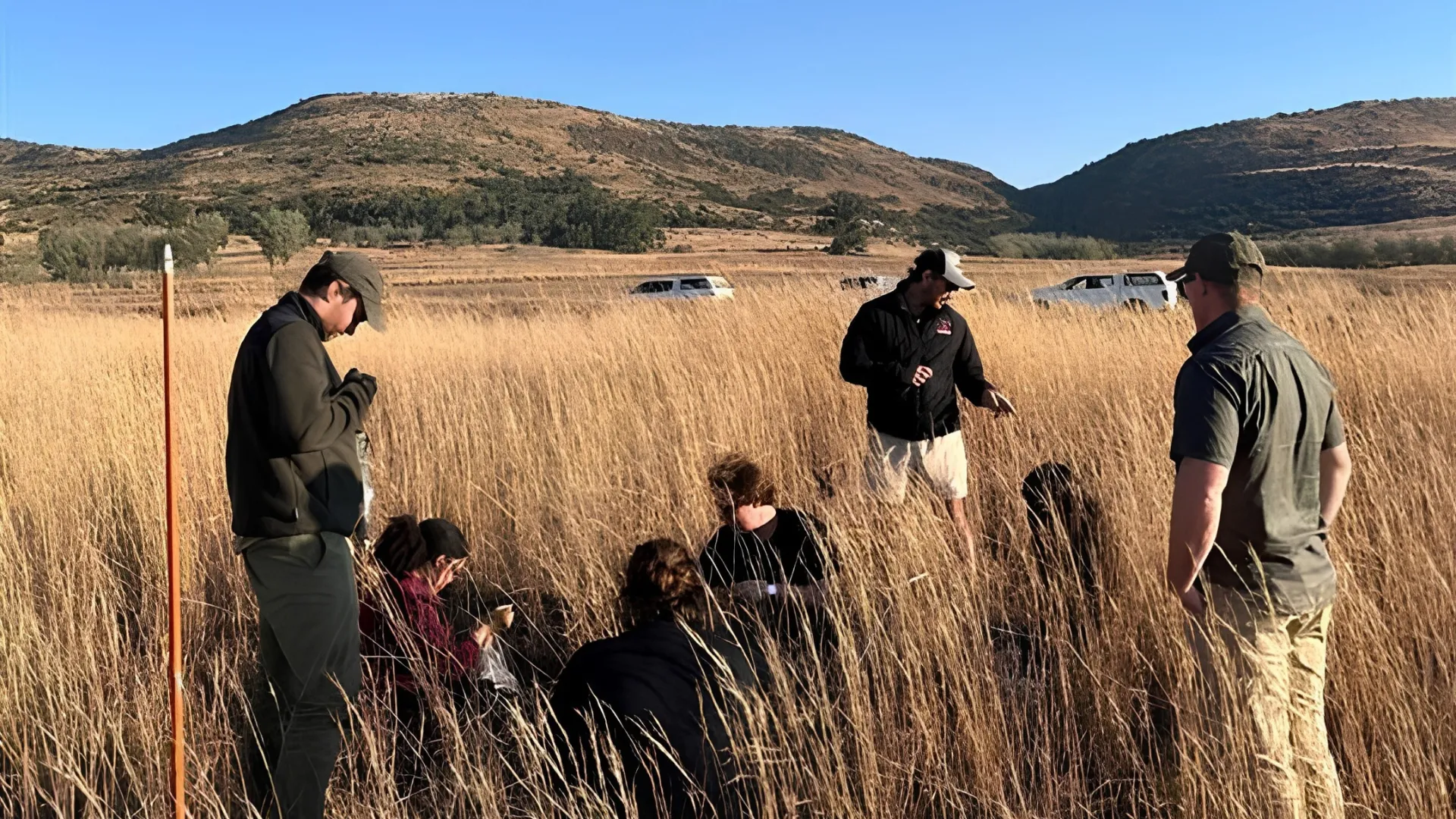
On paper, ecosystem restoration can look relatively straightforward: identify degraded landscapes, understand what is driving the degradation, determine what can be restored and find a way to finance this restoration. In reality, landscapes are rarely that simple. The further you get from maps, datasets and desktop assessments and into the places and communities where restoration actually needs to happen, the more complicated — and often more interesting — the picture becomes. The Restoring Landscapes in South Africa (ReLISA) programme is a good example of this.
ReLISA is a five-year programme funded through Germany’s International Climate Initiative (IKI). Led by the United Nations Environment Programme (UNEP) and implemented through a consortium including UN Development Programme (UNDP), UN Education, Scientific and Cultural Organization (UNESCO), the Endangered Wildlife Trust, Council for Scientific and Industrial Research, C4 EcoSolutions (C4) and unique land use, the programme aims to support ecosystem restoration across South Africa’s savanna, grassland and thicket biomes. ReLISA is not simply about restoring landscapes during the life of the programme. A central part of its ambition is to catalyse restoration opportunities that can attract sustainable finance and continue beyond the programme itself.
This is where C4’s work comes in. C4 and unique are developing pre-feasibility and feasibility studies for potential restoration projects, alongside investor-facing materials and other work to help turn restoration opportunities into investable projects. The programme deliberately has a degree of flexibility: rather than implementing a predetermined set of projects, it acts more like an incubator for project ideas, testing which opportunities have the potential to work ecologically, socially and financially.
Three landscapes currently being assessed for investable projects are the Waterberg, Wild Coast and Northern Drakensberg. Each presents different restoration opportunities — from addressing bush encroachment and exploring biochar in the Waterberg, to developing improved grazing and fire management, forest restoration and agroforestry potential in the Wild Coast, and furthering improved grassland management in the Northern Drakensberg.
But, understanding these opportunities requires more than identifying them on a map.
One of the most valuable aspects of fieldwork is that it allows early assumptions to be tested. For the ReLISA team, the Wild Coast provided a particularly powerful example. Previous assessments identified livestock grazing and forest fires as important pressures, with the landscape often described as heavily degraded and overgrazed. That narrative had informed the team’s initial thinking about what restoration might need to look like. However, field observations showed that conditions varied across the landscape and did not quite fit the expected picture. Cattle densities appeared low at several sites, particularly on the TRACOR lands, and grassland condition also differed between areas.
This did not contradict the existing evidence of degradation. Instead, it showed that the causes and extent of degradation cannot be assumed to be the same everywhere. The team therefore combined field observations with literature, remote sensing and expert knowledge to better understand whether the challenge was overgrazing, undergrazing or a combination of different pressures in different areas. This underscores the importance of understanding ecological condition and restoration needs at a local scale through dedicated fieldwork.
That is an important lesson for restoration work more broadly. A label such as “degraded” can sound objective, but it often hides a much more nuanced story. The same landscape can look very different depending on whether you are viewing it through the lens of biodiversity, grazing, carbon, livelihoods or ecosystem function. Fieldwork forces those perspectives to meet.
Early engagement in the Wild Coast brought an important local perspective to the assessment. Discussions highlighted the cultural, social and livelihood importance of cattle and productive grazing land. At the same time, ecotourism and conservation-based enterprises may also provide valuable opportunities. These contrasting options are both relevant, but their suitability and potential benefits are likely to vary across the landscape.
The discussions showed why local knowledge is essential when considering restoration options. Community members and other local stakeholders can provide insights into how the landscape is used, what people value and where different activities may be appropriate. In doing so, our assumptions were challenged: what we think communities will value is not necessarily what communities themselves value. These insights are being considered alongside ecological, spatial and financial evidence.
It is a deceptively simple point, but an important one. A technically impressive project can still fail to deliver meaningful outcomes if it is designed around what outsiders believe people need rather than what people prioritise in reality. The fieldwork in the Waterberg offered another useful surprise. Rather than encountering communities with limited engagement in the restoration challenge, the team found people with a strong understanding of the causes and consequences of bush encroachment. Community members could describe how the changing landscape affected grazing, how dense thorny vegetation made everyday activities more difficult and how these environmental challenges translated into economic consequences.
In other words, the field did not simply provide the project team with information. It challenged the idea that technical experts would necessarily be the ones bringing the deepest understanding of the problem.
This is ultimately why fieldwork matters. For ReLISA, fieldwork combines two essential perspectives: the biophysical reality of the landscape and the lived experience of the people who depend on it. Soil samples, biodiversity observations, assessments of vegetation and degradation help establish what is happening in the ecosystem. Conversations with communities, farmers and land managers help reveal how people are managing the land, what opportunities they see and what barriers stand in their way. Neither perspective is sufficient on its own.
The most promising restoration project is not necessarily the one that looks best on a map or generates the most carbon. ReLISA is ultimately trying to find opportunities where restoration can improve ecosystems and livelihoods, with carbon finance acting as one mechanism for making those outcomes possible. As the team puts it, “carbon pays the bills” — it is not the end goal.
Perhaps that is the broader lesson from ReLISA. Good project development is not about proving that our original assumptions were right. It is about creating enough space to discover where they are wrong — and having the flexibility to change course when the evidence tells us they are. Sometimes the most valuable thing fieldwork can give a project is not confirmation of what we already thought we knew, but a reason to ask a better question.