
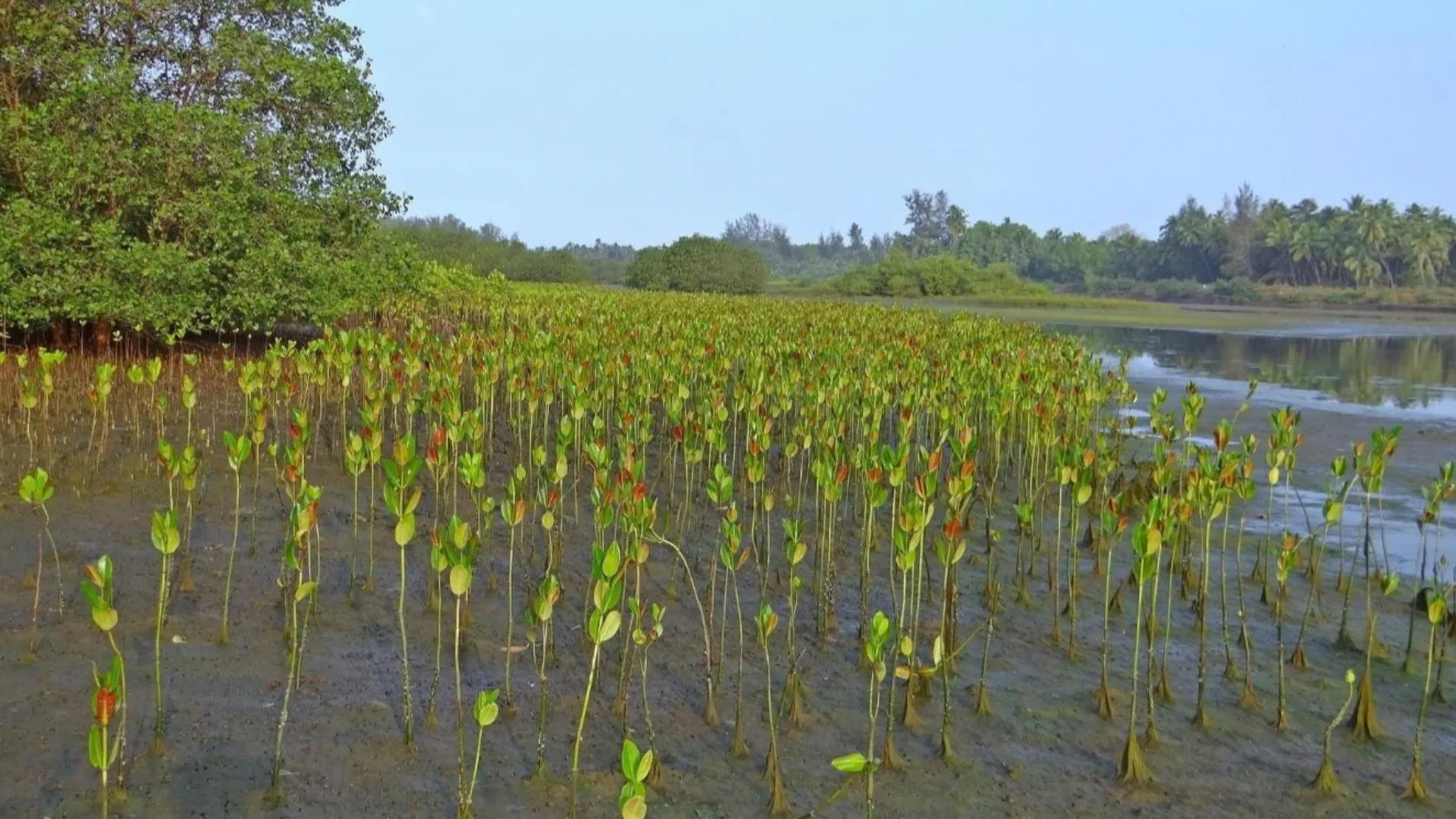
In many tropical ecosystems, mangroves occupy the boundary between land and ocean, where their dense root systems support biodiversity and provide important benefits to coastal communities. They serve as breeding and nursery grounds for fish and other marine species, supporting food security and livelihoods. Crucially, mangroves limit coastal erosion by acting as a buffer against the force of waves and storm surges, reducing the impact of storms on coastal communities.
Mangroves and the waterlogged soils beneath them also capture and retain large quantities of carbon, making these forests an important part of the world’s blue carbon ecosystems. Globally, mangroves store carbon equivalent to more than 21 billion tonnes of carbon dioxide and reduce flood risk for approximately 15 million people each year, according to the Global Mangrove Alliance.
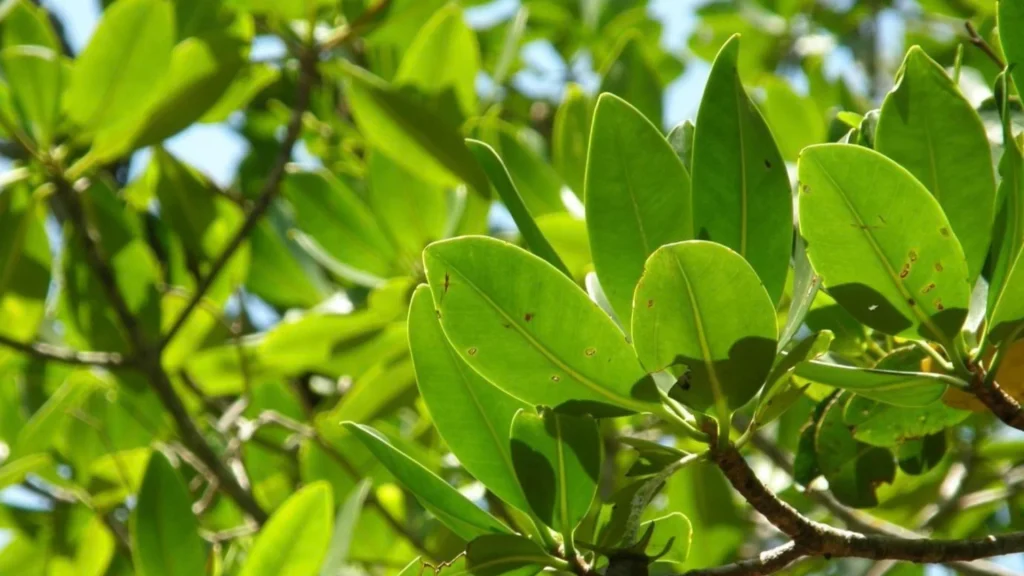
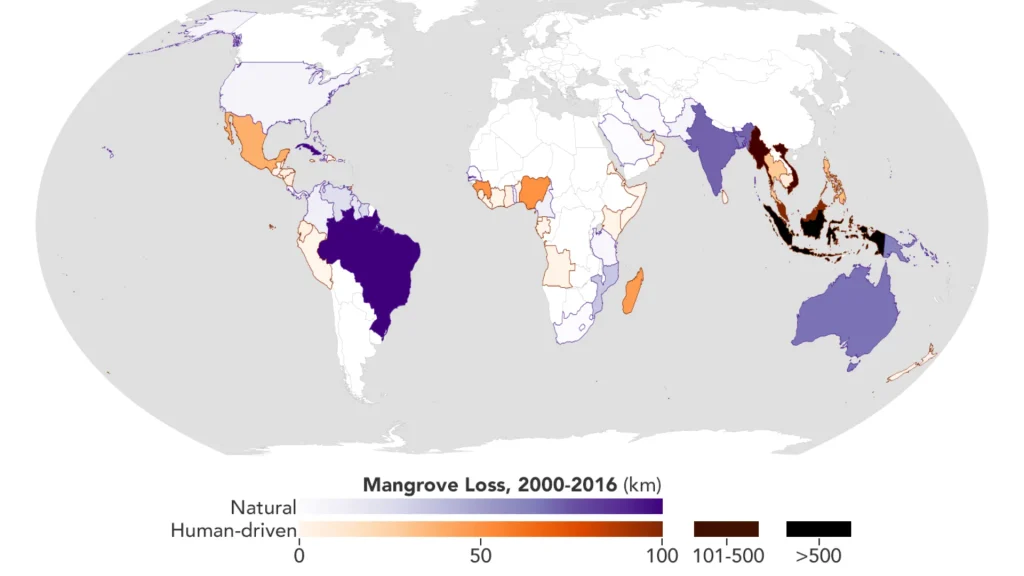
Despite their ecological, social and economic value, mangroves are widely considered one of the most threatened ecosystems globally and have been extensively cleared or degraded by coastal urban development, farming and aquaculture, oil spills, and unsustainable resource use. According to the Global Mangrove Alliance’s 2024 report, 2,839 km2 of mangroves were lost between 2000 and 2020, despite the expansion of mangroves in certain regions, including South and Southeast Asia, Central America and Africa. Climate change further exacerbates anthropogenic pressures by altering temperatures, which affect plant growth rates and overall ecosystem health, while sea level rise and increasingly severe storms cause direct damage to mangrove forests.
Recognising the need for coordinated action, UNESCO established the International Day for the Conservation of the Mangrove Ecosystem — or, simply, World Mangrove Day — in 2015. Observed annually on 26 July since 2016, the Day raises awareness of the importance of mangroves and promotes their sustainable conservation, restoration and use. In addition to raising awareness through World Mangrove Day, UNESCO actively supports mangrove conservation through Biosphere Reserves, World Heritage sites and UNESCO Global Geoparks.
While mangroves continue to decline, recent research offers grounds for cautious optimism. A 2026 study using satellite observations from 1984 to 2023 found that mangrove losses and degradation have declined substantially, while regeneration and natural expansion have increased. However, the research also shows that degradation (detected as canopy thinning in the study) is more widespread than mangrove loss and that newly established forests require time to recover the carbon storage, biodiversity and protective functions of mature ecosystems.
Curbing degradation therefore requires more than planting trees. Effective action must protect existing forests, restore natural tidal and sediment processes and address the underlying drivers of ecosystem loss. Restoration should be research-based and should include long-term monitoring and meaningful participation by the communities that manage and depend on these ecosystems. Stronger policy, governance and enforcement must be combined with sustainable livelihood opportunities and sufficient, accessible finance. Global initiatives are increasingly seeking to connect these priorities, including The Mangrove Breakthrough’s goal of securing 15 million hectares of mangroves by 2030, underpinned by $4 billion of sustainable finance.
C4 EcoSolutions contributes to the global mangrove conservation goal through its work on mangrove, coastal ecosystem and carbon projects. The firm has developed funding proposals, scoping studies and other technical assessments for more than ten projects specifically involving mangrove restoration, alongside a wider portfolio of coastal restoration assignments. Recent assignments include a pre-scoping study assessing green and blue carbon potential across five island nations in Southeast Asia, Africa and the Caribbean, as well as ecosystem-based adaptation (EbA) implementation protocols for a climate adaptation project in Mozambique. C4 is also actively expanding its work in blue carbon, recognising the importance of many coastal ecosystems as carbon sinks.
Through this work, C4 supports the development of locally appropriate, scientifically grounded and financially viable solutions that enable mangroves to recover and continue supporting coastal ecosystems and communities. C4 hopes that World Mangrove Day will help sustain attention on the practical need for greater investment and continued support for effective mangrove restoration.