
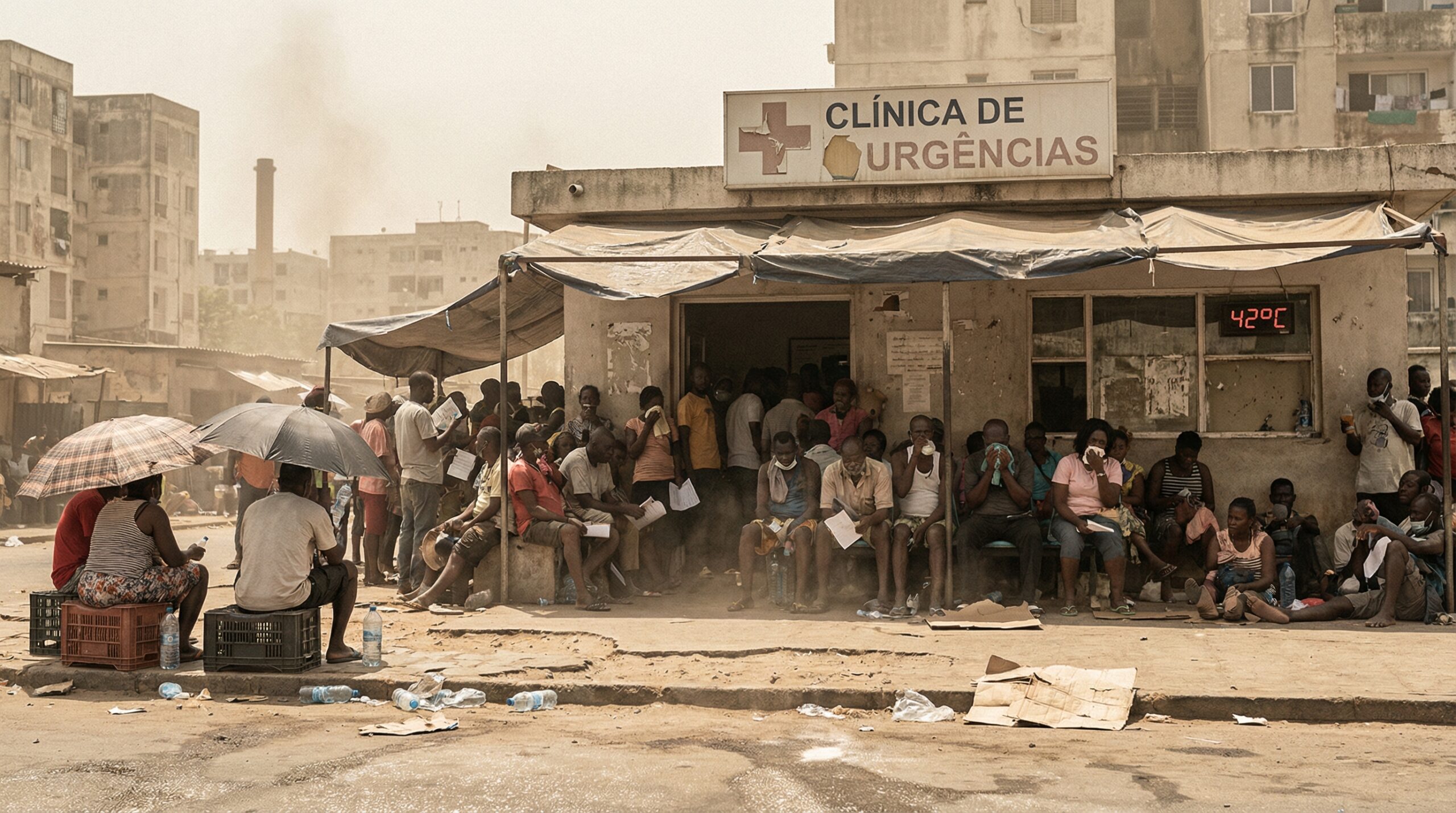
At TAG International and C4 EcoSolutions, we integrate health risk considerations into programme design and institutional strengthening across mitigation and adaptation contexts. Climate resilience and public health resilience are interconnected system outcomes: strengthening one reinforces the other.
Climate change is reshaping the conditions in which health systems operate. Rising temperatures, shifting rainfall patterns, and more frequent extreme events are influencing disease distribution, food systems, and healthcare delivery capacity — in ways that are difficult to plan for in isolation.
The World Health Organisation identifies climate change as a growing risk factor for heat stress, air pollution exposure, vector-borne diseases, and water-related illness. These impacts are uneven — for example, communities with fragile infrastructure and limited healthcare capacity face greater exposure and slower recovery.
These pressures are already emerging across multiple domains. Heatwave frequency and intensity are increasing globally (IPCC), with particular risk for cardiovascular and respiratory health in dense urban environments. Observed yield pressures on crops, such as wheat and maize, are emerging in vulnerable regions as climate variability intensifies. Warmer, wetter conditions are extending the geographic range of vector-borne diseases. Flood events compromise sanitation and raise contamination risks.
These pressures bear directly on health infrastructure. For example, extreme weather disrupts facilities, supply chains, and emergency services. The implication is clear: health system resilience and climate resilience are not separate objectives — they are interdependent outcomes.
In this context, TAG International and C4 EcoSolutions take an integrated approach — combining mitigation to limit long-term exposure, adaptation planning to reduce vulnerability, data-informed systems to anticipate health risks, and institutional coordination to protect vulnerable populations.
As climate and health risks continue to converge, integrating these considerations into programme design will become increasingly necessary to support resilient systems.