
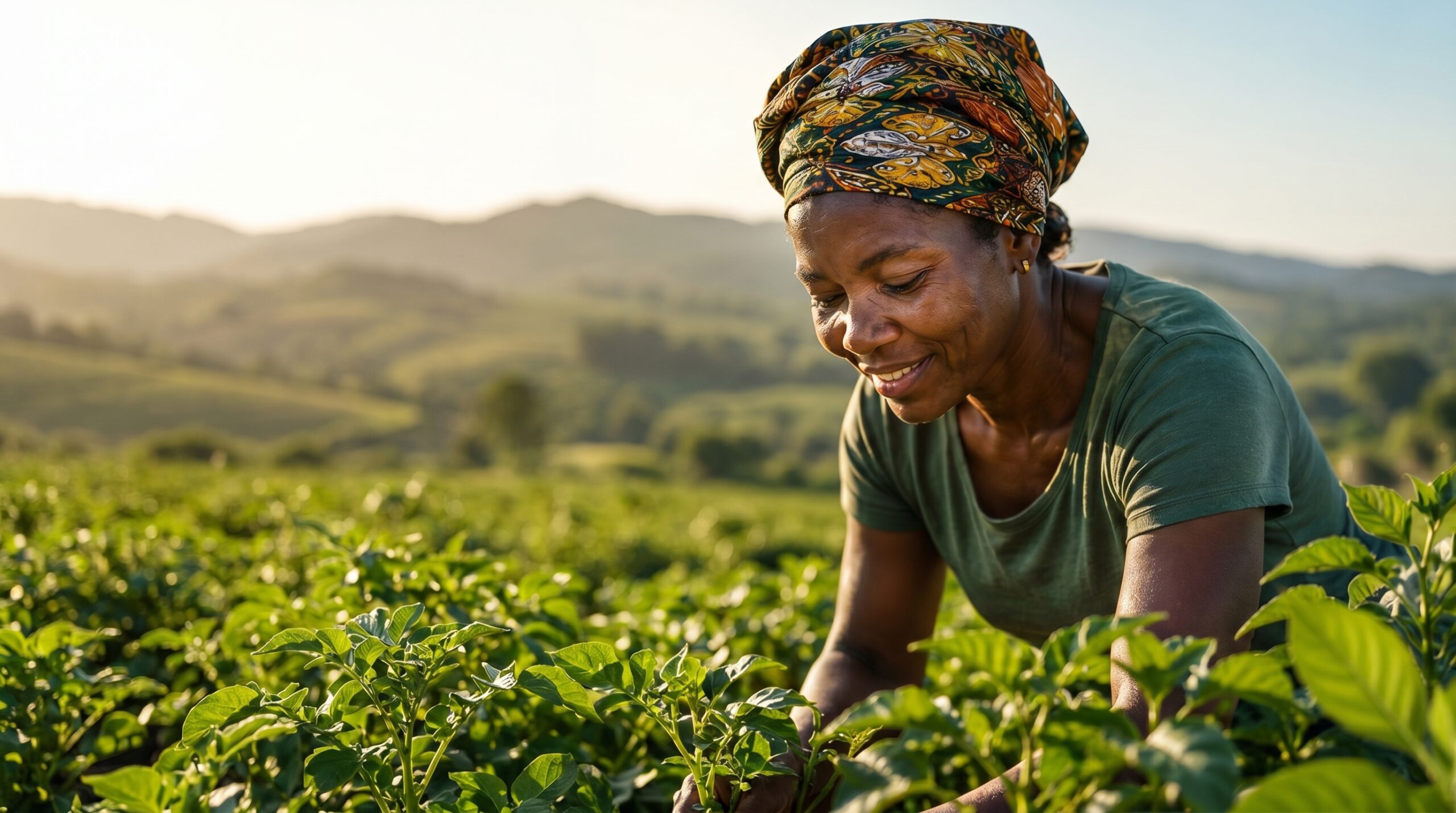
Every dollar invested in women is a dollar that compounds. It pays back in food on the table, children in school, and healthier villages. Healthier, better-resourced households are also more able to withstand the adverse effects of a warming planet. Yet women remain one of the most chronically underfunded levers in global development. If we are serious about ending poverty and building climate resilience, that has to change.
Why the Economic Case is Clear
The economic case is hard to argue with. According to UN Women, women reinvest up to 90 percent of their income into their families and communities, compared with roughly 30 to 40 percent for men. When a woman earns, the money flows into nutrition, school fees, healthcare, and small business inventory. It does not sit in an account or leak out of the local economy. It circulates.
Multiply that across a village, a district, a country, and you start to see why the World Bank, the IMF, and the OECD all describe gender equity not as a moral nicety but as a macroeconomic strategy. McKinsey has estimated that closing the global gender gap in labour markets could add $12 trillion to global GDP. That is not a rounding error.
Education is the multiplier behind the multiplier. On average, a girl who completes secondary school will earn nearly twice as much as one who does not. She is also more likely to marry later, have fewer and healthier children, and be able to send her own daughters to school. These gains in earnings, health, and education compound across generations, raising household incomes and improving outcomes for the next.
Yet 122 million girls worldwide are still out of school. Each of them represents not just a personal loss, but a community-level forfeit of productivity, innovation, and resilience.
Where Climate Vulnerability and Leadership Intersect
Climate change adds further urgency to this challenge. Women in low-income countries are disproportionately affected by climate impacts, particularly because they are often responsible for food production, water collection, fuel gathering, and caregiving during and after climate-related disasters. The UN estimates that 80 percent of people displaced by climate change are women.
When droughts, floods, or storms occur, women frequently face increased workloads and reduced livelihood options. At the same time, their central role in household and community resilience positions them as key agents of adaptation.
According to the FAO, women farmers given equal access to seeds, credit, and land could increase yields by 20 to 30 percent. Women-led cooperatives are also often the first to adopt drought-resistant crops, rainwater harvesting, and climate-smart agricultural practices.
Across many communities, greater participation of women in decision-making has been associated with stronger and more effective climate adaptation outcomes.
The Structural Gaps Still Holding Women Back
The barriers are well-known: women still hold less than 20 percent of agricultural land globally, are far less likely to access formal credit, and remain under-represented in climate finance decision-making processes.
Addressing these barriers is not charity. It is one of the highest-yielding investments available to governments, funders, and companies. Microfinance institutions have long observed that repayment rates among women borrowers often outperform those of men. Similarly, climate adaptation programmes that place women at the centre frequently achieve stronger and more sustained outcomes than those that do not.
Moving Women to the Centre of Climate Finance
So, here is the ask, for those allocating capital, designing programmes, and shaping policy: move beyond treating women and girls as a secondary consideration and place gender at the centre of climate and development strategies. Fund women-led businesses. Support women’s land tenure and ownership rights. Channel climate finance to women’s cooperatives. Ensure that adaptation plans are designed with the participation of the people who will implement them on the ground. In the most climate-vulnerable communities, many of those people are women.
When women are empowered economically and socially, the benefits extend across households, communities, and local economies. The evidence is clear: investments in women and girls consistently generate broad and lasting development returns. The challenge is no longer whether these investments work, but whether sufficient resources and priority are being directed towards them.