
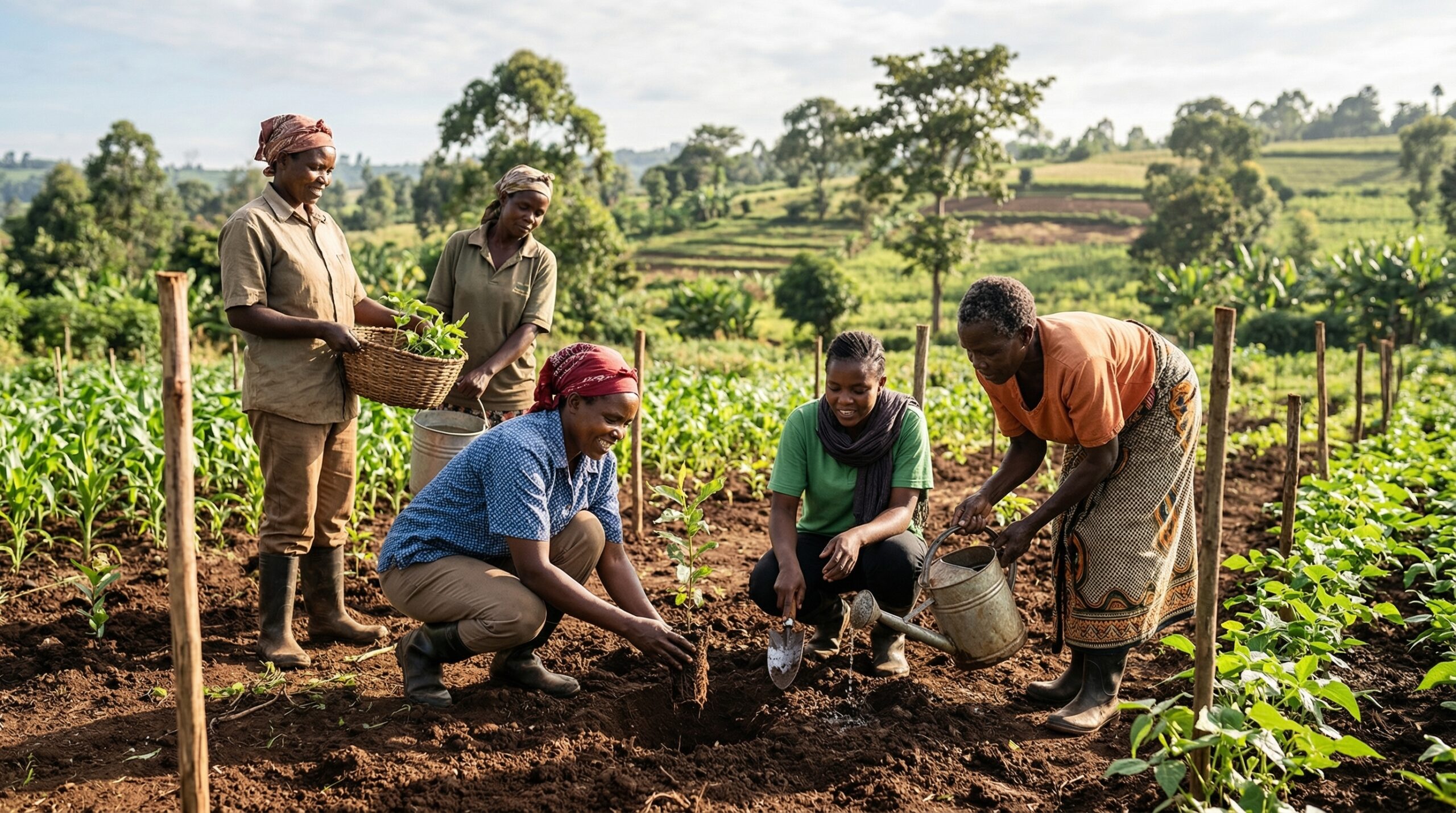
As we approach International Women’s Day on 8 March, it is worth reflecting on what gender equality truly means in the context of environmental and climate programmes. Climate change is not gender-neutral. Its impacts — from drought and land degradation to biodiversity loss and water scarcity — are often felt most acutely by women, particularly in rural and climate-vulnerable regions. At the same time, women are central to agriculture, natural resource management and community resilience.
At C4 EcoSolutions, our work across more than 110 countries has repeatedly shown that climate solutions are strongest when they are inclusive. Whether designing carbon projects under the Verified Carbon Standard, supporting restoration initiatives through UNEP and UNDP, or contributing to the ReLISA programme in South Africa, community engagement and equitable participation are not add-ons, they are essential components of long-term success.
Many of our projects explicitly recognise the role of smallholder farmers and local communities. Women often form a significant proportion of these groups. Ensuring Free, Prior and Informed Consent (FPIC), establishing grievance mechanisms and designing benefit-sharing models are practical steps that help create space for women’s voices in project design and implementation. Where projects empower women through agroforestry, improved land management and access to carbon markets, the benefits extend beyond emissions reductions to household income, food security and intergenerational resilience.
Yet progress remains uneven. Women are still underrepresented in climate finance decision-making, carbon market governance and technical leadership roles. Data on gender-differentiated climate impacts is often limited, and gender considerations can become procedural rather than transformative. True gender equality requires moving beyond participation toward influence, ensuring women shape project priorities, control resources and access climate finance directly.
On this International Women’s Day, the challenge is clear: climate and environmental programmes must embed gender equality not only in safeguards, but in strategy, finance and leadership. Building resilient landscapes also means building equitable systems because sustainable climate solutions depend on both ecological integrity and social justice.