
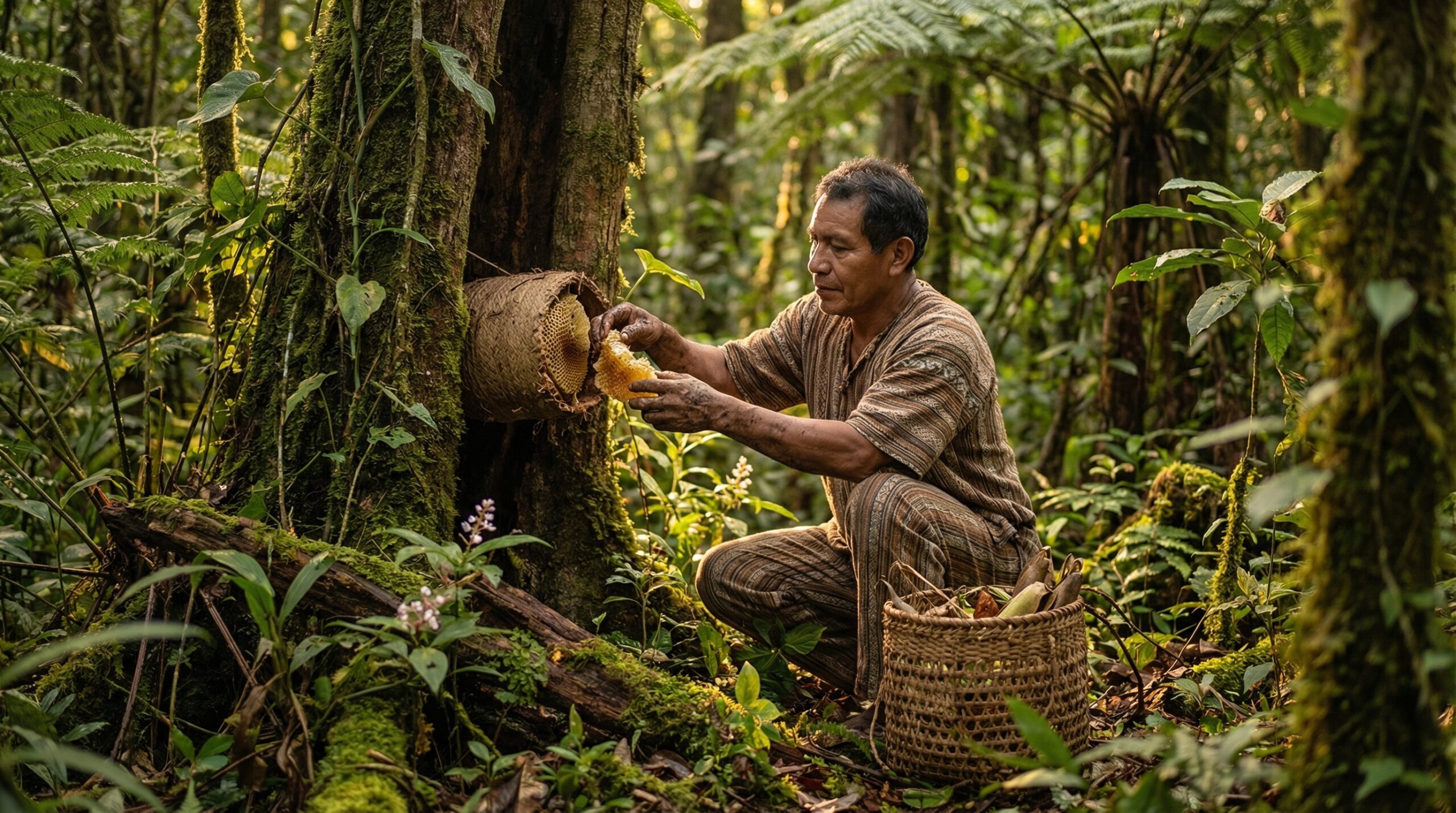
For generations, forest-dependent communities have developed the knowledge required to use their landscapes productively without destroying them. Nowhere is this type of community knowledge more important than when it comes to managing and maintaining sustainable forest ecosystems.
When we consider forest economics, we tend to focus on the timber industry and commercial harvesting. However, in most areas of the world, forests create livelihoods through a much broader range of ecological and socio-economic relationships. For example, forest ecosystems help to create food systems and are a source of firewood and medicinal plants. Forests also produce a variety of non-wood forest products (NWFP) such as honey, fibers and resins. In addition to the environmental functions of a forest ecosystem, many communities around the world have developed cultural systems which influence how individuals within those communities will interact with their lands and resources. Indigenous and local communities maintain customary practices, beliefs and forms of governance that are connected to the physical landscape of their forests. Some examples of these connections include the customary rules that govern an individual’s right to harvest forest products seasonally, together with ways in which ecological knowledge is passed down from one generation to the next and the role that forest spaces play as sites of social and ceremonial importance. In many cases, forests contribute to an individual’s sense of identity, help to foster social cohesion and may be important in the process of an individual transitioning into adulthood. Therefore, the loss or degradation of a forest has the potential to impact not only the ability of individuals to earn a living — through the direct use of the materials available in the forest — but also potentially undermine cultural continuity and disrupt the social structures of a community. Additionally, small-scale agroforestry and sustainable land use create additional revenue streams for rural families and help stabilize household incomes. These NWFP, along with others mentioned above, make up an important part of the local economy that is often in addition to and sometimes separate from formal market economies. They help to support rural families where other job opportunities are limited.
This year’s “Forests and Economies” theme demonstrates the important connection between healthy forest systems and the well-being of individuals and communities. Bringing forward the importance of the contributions made by forest-dependent communities who have maintained their lands for multiple generations using their traditional knowledge and stewardship skills to keep the natural balance intact in their respective environments.
These communities play a very substantial role in managing and maintaining sustainable forest ecosystems. Many of the communities that rely on forests for their livelihoods actively manage forest resources, monitor changes in their landscapes and continue to practice land uses that are beneficial to the overall health of their ecosystems. Although forest-dependent communities are instrumental in maintaining the sustainability of the forest ecosystems, they do not always receive equitable distribution of the benefits derived from these forests. In many parts of the world, forest-dependent communities experience environmental injustices related to the pressure of unsustainable resource extraction and land conversion, together with climate-related impacts. These pressures often erode the livelihoods of these communities, thereby reducing the ability of said communities to participate in decision-making processes regarding the management of their forest resources. Therefore, increasing community participation in forest governance continues to be necessary for the sustainable use of forests.
Many climate finance mechanisms increasingly recognise the economic and environmental value of community stewardship. REDD+ (Reducing Emissions from Deforestation and Forest Degradation) is one such mechanism that links forest conservation to carbon markets, creating financial incentives to maintain and restore forest cover while supporting local participation in forest management. Community-led REDD+ approaches place forest-dependent communities at the centre of conservation efforts. Through community-based forest monitoring, local stakeholders track changes in forest cover, identify pressures on forest resources and contribute directly to conservation outcomes. These monitoring systems strengthen transparency and accountability while drawing on local knowledge of forest landscapes.
In addition to monitoring, REDD+ initiatives can support sustainable livelihood activities that reduce pressure on forest ecosystems. Climate-resilient agriculture, agroforestry and the sustainable harvesting of non-timber forest products can provide alternative income sources while maintaining forest cover. By aligning conservation incentives with local economic opportunities, community-led REDD+ approaches help strengthen rural economies while supporting long-term forest resilience. When climate finance mechanisms recognise and support community stewardship, forest conservation becomes both an environmental and socio-economic investment. Such approaches demonstrate how forest protection, sustainable livelihoods and local governance can reinforce one another to sustain forest landscapes over the long term.
C4 EcoSolutions works at the intersection of climate finance, community engagement and ecosystem restoration, which aligns directly with the principles outlined above. Through the design and implementation of nature-based projects — including REDD+ and landscape restoration initiatives — C4 supports models that place local communities at the centre of conservation efforts while generating measurable environmental outcomes. By integrating technical expertise with on-the-ground stakeholder engagement, C4 helps translate climate finance mechanisms into practical, community-led solutions that protect forest ecosystems, strengthen local economies and contribute to long-term resilience.