
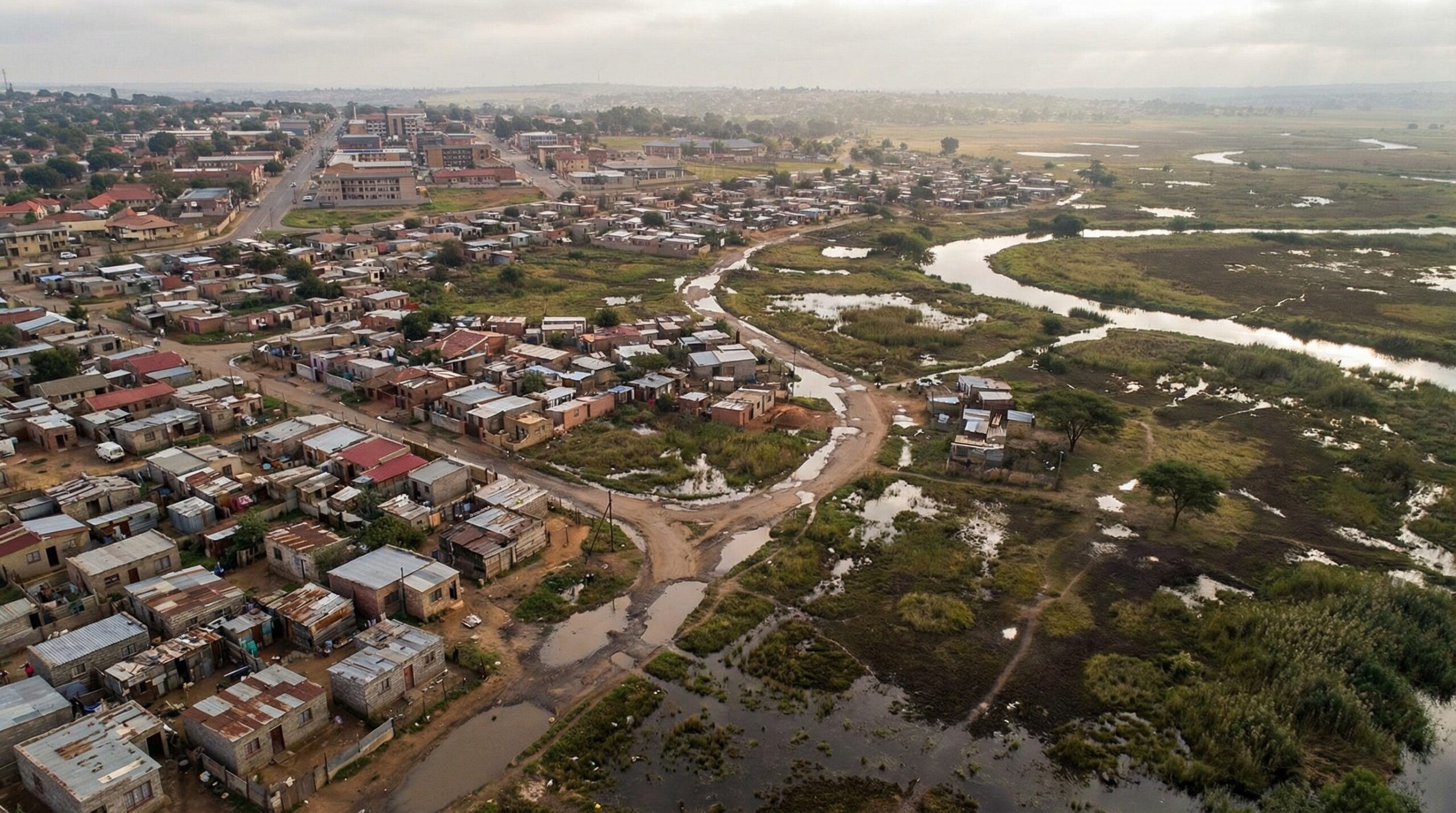
Across the Southern African Development Community (SADC), rapid urbanisation is reshaping how climate risk is experienced and managed. Much of the region’s urban growth is concentrated in small to intermediate-sized cities with constrained adaptive capacity. Unplanned expansion into floodplains, wetlands and other high-risk areas has increased climate vulnerability — particularly for low-income households. At the same time, climate change is exacerbating the frequency and severity of extreme events, placing additional pressure on already stretched local governments.
For these cities, strengthening urban resilience requires planning tools that are locally responsive, actionable and aligned with the realities of municipal governance in the SADC region. One approach designed to address this gap is City Resilience Action Planning (CityRAP), developed by UN-Habitat for small to intermediate-sized cities in sub-Saharan Africa. CityRAP is a participatory resilience planning methodology that helps local governments and urban stakeholders jointly assess risk and agree on priority actions.
Implemented over a two to three month period, the CityRAP process guides municipal focal points, community representatives and technical stakeholders through a sequenced set of activities, from participatory risk mapping and municipal self-assessment to prioritisation and action planning. The emphasis is on building a shared understanding of current climate risks, strengthening coordination across departments and ensuring that local knowledge informs decision-making from the outset.

The primary output of this process is a City Resilience Framework for Action (RFA). This framework consolidates priority actions across the five resilience pillars into short-, medium- and long-term measures, aligned with existing plans and budgets. The RFA is an enabling tool, allowing SADC cities to mainstream resilience into ongoing governance processes and translate local priorities into bankable adaptation projects.
CityRAP has been iteratively tested in nearly 30 African cities and towns, including several in the SADC region such as Zomba (Malawi) and Moroni (Comoros). For cities that sit below the threshold typically targeted by large-scale resilience initiatives, the tool offers a pragmatic entry point into climate adaptation planning.
For C4 EcoSolutions, the CityRAP approach illustrate how urban resilience can be operationalised through people-centred, partnership-driven planning. As climate risks continue to concentrate in cities across the SADC region, participatory planning tools will be central to turning risk awareness into sustained urban resilience outcomes.
You can learn more about CityRAP here: City Resilience Action Planning (City RAP) Tool